
In today’s digital age, our homes are getting smarter with the advent of the Internet of Things (IoT). IoT devices, such as smart thermostats and voice-controlled assistants, provide exceptional convenience and automation.
However, as these devices proliferate, they also introduce new vulnerabilities that cybercriminals can exploit. Understanding the importance of cybersecurity for IoT devices and learning how to protect your smart home is crucial.
This blog delves into the essentials of securing IoT devices, highlighting the significance of cybersecurity training courses, certifications, and resources for beginners.

The Rise of IoT in Smart Homes
The Internet of Things (IoT) refers to a network of interconnected physical devices, such as appliances, sensors, and cameras, that are linked to the internet. This connectivity enables them to communicate and interact seamlessly with each other. In a smart home setup, IoT devices can control lighting, security cameras, home entertainment systems, and even kitchen appliances. According to recent studies, the global number of IoT devices is expected to reach 30.9 billion by 2025, with a significant portion of these devices being used in homes.While IoT devices provide convenience, they also pose significant cybersecurity risks. Many IoT devices have minimal built-in security features, making them attractive targets for hackers. The consequences of an IoT breach can be severe, ranging from unauthorized access to personal data to complete control over home systems. Therefore, understanding and implementing cybersecurity measures is essential for anyone using IoT devices.Common Cybersecurity Risks Associated with IoT Devices
- Weak Passwords: Many IoT devices come with default usernames and passwords that are often easy to guess. If these credentials are not changed, they provide an easy entry point for cybercriminals.
- Unencrypted Communication: Some IoT devices communicate data without encryption, making it easier for hackers to intercept and manipulate information.
- Overlapping Network Access: IoT devices often operate on the same network as more secure devices, such as computers and smartphones.
- Physical Security Risks: Some IoT devices, like smart locks and security cameras, directly control access to the home. If compromised, these devices can be used to gain physical access to a home.
Best Practices for Securing IoT Devices in Your Smart Home
To safeguard your smart home against cyber threats, it’s crucial to put strong security measures in place. Here are some best practices: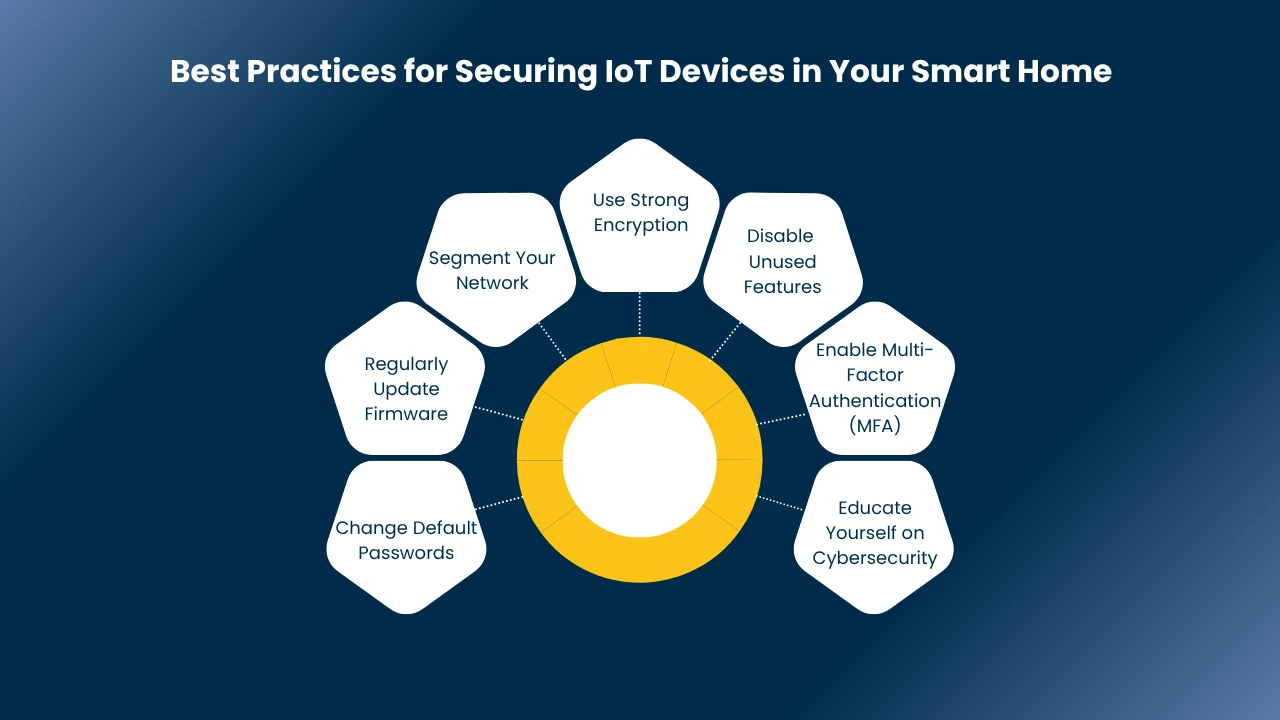
- Change Default Passwords: The first step in securing IoT devices is to change default usernames and passwords to something unique and difficult to guess. Use a mix of letters, numbers, and special characters to create strong passwords.
- Regularly Update Firmware: Ensure that your IoT devices are running the latest firmware. Manufacturers frequently provide updates to fix security weaknesses. Set up automatic updates if the device supports it.
- Segment Your Network: Create a separate network for IoT devices, distinct from the network used for personal computers and smartphones. This way, if an IoT device is compromised, it will not directly impact other devices on the primary network.
- Use Strong Encryption: Ensure that your Wi-Fi network is encrypted using WPA3 or at least WPA2. Avoid using outdated encryption methods such as WEP, which are easily crackable.
- Disable Unused Features: Many IoT devices come with features that you may not use. Turn off these features to minimize possible attack points. For example, if a smart camera has remote access capabilities that you don’t use, disable this feature.
- Enable Multi-Factor Authentication (MFA): Whenever possible, enable MFA on IoT devices. MFA adds an extra layer of security by requiring more than just a password to access the device.
- Educate Yourself on Cybersecurity: Understanding the fundamentals of cybersecurity is crucial in today’s digital age. Enroll in a cybersecurity course training program or pursue cybersecurity course certification to gain more knowledge on protecting your digital assets.