

Cyber security is no longer just an IT skill, it’s a critical career choice in today’s digital-world. With cyber attacks, data breaches, and ransomware incidents increasing rapidly, organizations across India are actively hiring skilled professionals to protect their digital assets.
If you’re searching for a cyber security course in India, this guide will help you understand everything about course types, eligibility, fees, syllabus, certifications, and job opportunities. so you can confidently choose the right path.

Why Choose a Cyber Security Course in India?
India has become a global IT and digital services hub. With this growth comes an urgent demand for cyber security professionals.
Key Reasons to Learn Cyber Security in India
- Rapid increase in cyber threats and data breaches
- Strong demand across IT, banking, healthcare, and government sectors
- High-paying job roles with global opportunities
- Short learning curve compared to traditional degrees
- Options for beginners, working professionals, and IT experts
Whether you are a student, IT professional, or career switcher, a cyber security course can open doors to long-term career stability.
Also Read: 50 Ethical Hacking Interview Questions and Answers You Must Know
What is a Cyber Security Course?
A cyber security course focuses on protecting systems, networks, applications, and data from cyber attacks. These courses teach you how hackers think and how to stop them.
Core Skills
- Network security & firewalls
- Ethical hacking & penetration testing
- Malware analysis
- Cloud security
- Risk management & compliance
- Incident response & threat hunting
Types of Cyber Security Courses in India
India offers multiple learning paths depending on your experience level and career goals.
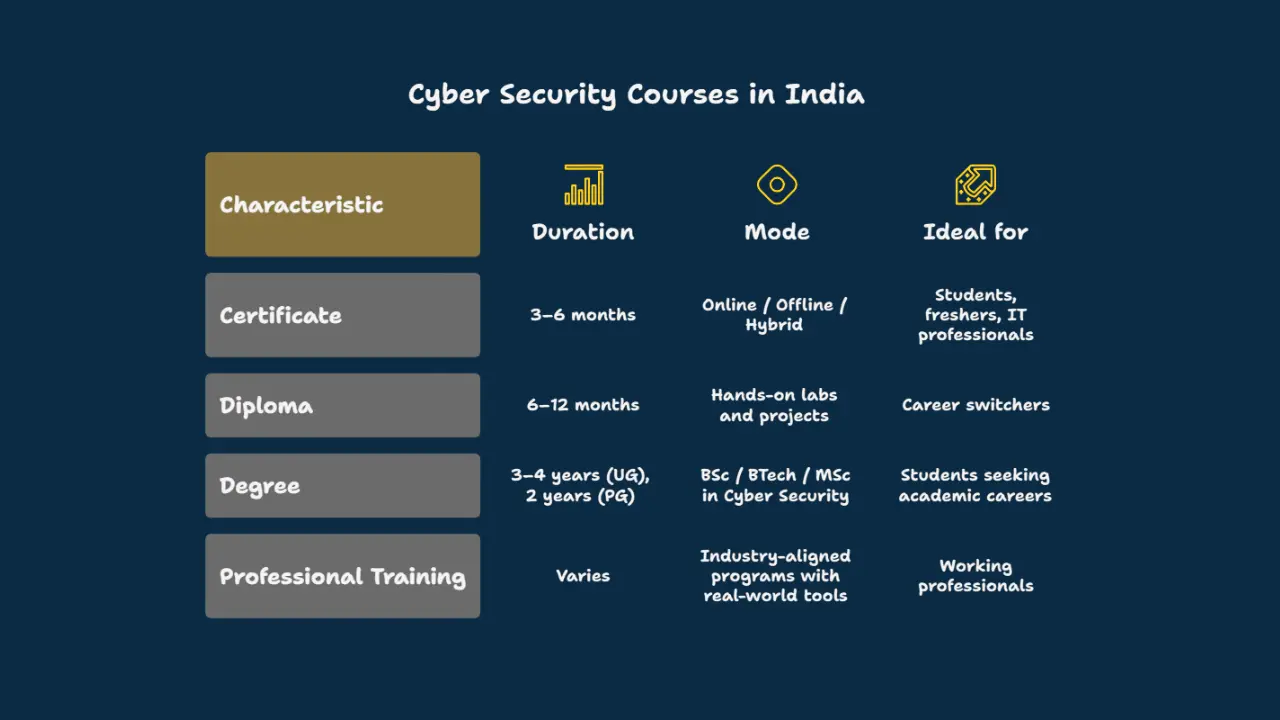
1. Certificate Cyber Security Courses
Best for beginners and professionals looking to upskill.
- Duration: 3–6 months
- Mode: Online / Offline / Hybrid
- Ideal for: Students, freshers, IT professionals
2. Diploma in Cyber Security
More structured and practical than certificates.
- Duration: 6–12 months
- Includes hands-on labs and projects
- Ideal for career switchers
3. Degree Programs (UG / PG)
Academic programs offered by universities.
- BSc / BTech / MSc in Cyber Security
- Duration: 3–4 years (UG), 2 years (PG)
- Ideal for students seeking academic careers
4. Professional & Corporate Training
Industry-aligned programs with real-world tools.
- Focus on practical skills
- Often includes certification preparation
- Ideal for working professionals
Eligibility for Cyber Security Course in India
The good news? You don’t need to be a coding expert to start.
General Eligibility
- Basic computer knowledge
- Interest in security & technology
- For advanced courses: Knowledge of networking, Linux, or IT basics
Who Can Apply?
- 12th pass students
- Graduates (any stream, preferably IT)
- Working professionals
- Network engineers, developers, system admins
Also Read: Ethical Hacking vs Cyber Security: Key Differences, Skills, Careers & Salaries
Cyber Security Course Syllabus
A well-designed cyber security training program in India usually covers:
Foundation Topics
- Introduction to cyber security
- Networking fundamentals
- Linux & Windows security
- Cyber laws & compliance
Core Modules
- Ethical hacking & penetration testing
- Web application security
- Network security & firewalls
- Cryptography & data security
- Malware analysis
Advanced Topics
- Cloud security (AWS, Azure)
- SIEM & SOC operations
- Incident response & forensics
- Vulnerability assessment
Practical Learning
- Live labs
- Real-world case studies
- Capstone projects
Cyber Security Course Fees in India
Fees vary depending on course type, institute, and duration.
Average Course Fees
- Certificate courses: ₹30,000 – ₹80,000
- Diploma programs: ₹70,000 – ₹1,50,000
- Advanced professional training: ₹1,00,000 – ₹3,00,000
- Degree programs: ₹2,00,000 – ₹6,00,000
Always choose courses with hands-on labs, real tools, and placement support rather than just theory.
Top Cyber Security Certifications in India
Certifications boost credibility and salary potential.
Popular Certifications
- CEH (Certified Ethical Hacker)
- CompTIA Security+
- CISSP
- CISM
- CHFI
- SOC Analyst Certifications
Career Opportunities After Cyber Security Course
Cyber security professionals are in demand across industries.
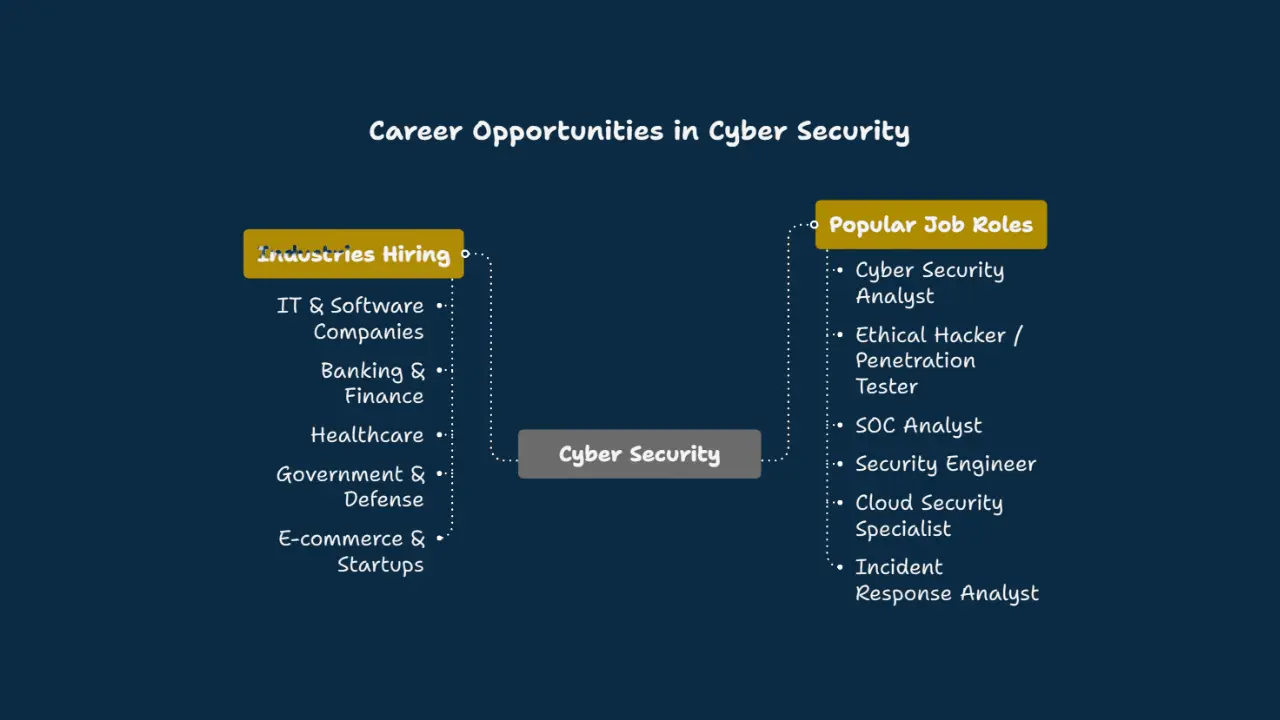
Popular Job Roles
- Cyber Security Analyst
- Ethical Hacker / Penetration Tester
- SOC Analyst
- Security Engineer
- Cloud Security Specialist
- Incident Response Analyst
Industries Hiring
- IT & software companies
- Banking & finance
- Healthcare
- Government & defense
- E-commerce & startups
Salary After Cyber Security Course in India
Salaries depend on skills, certifications, and experience.
Average Salary Range
- Fresher: ₹4 – ₹7 LPA
- 2–5 years experience: ₹8 – ₹15 LPA
- Senior professionals: ₹20+ LPA
Read More: Best 40 Tools for Ethical Hacker in 2026
How to Choose the Best Cyber Security Course in India
Before enrolling, check these points:
- Updated 2026 curriculum
- Hands-on labs & tools
- Industry-experienced trainers
- Certification support
- Placement or career assistance
- Student reviews & success stories

Conclusion
A cyber security course in India is a smart investment for anyone looking to build a future-proof career. With rising cyber threats, skilled professionals are not just valued, they’re essential.
Whether you’re a student, a fresher, or a working professional, the right cyber security training can help you secure high-paying jobs, work globally, and stay relevant in the digital age.
Ready to start your cyber security career? Enroll in Orbus Cybersectrainings job-oriented cyber security course in India with hands-on training, certifications, and placement support.