
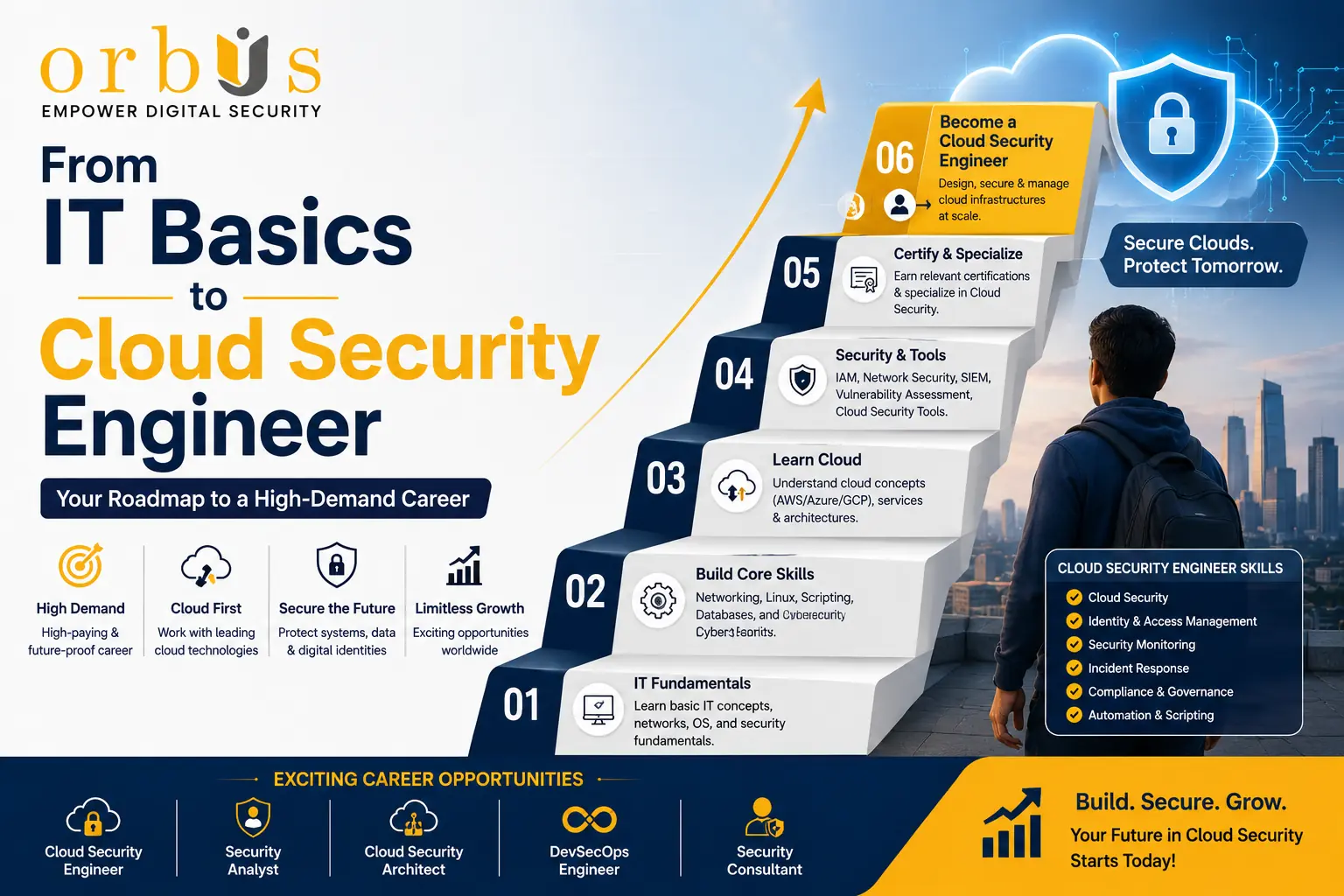
From IT Basics to Cloud Security Engineer
 Salary potential tends to improve as professionals gain practical experience and specialised skills. Certifications, cloud-platform knowledge, and exposure to real production environments can strengthen career growth, and senior professionals with architecture, IAM, and enterprise security experience can move into more specialised, higher-responsibility positions.
That said, cloud security has a demanding learning curve. New professionals often need to understand networking, operating systems, cloud platforms, identity concepts, and security controls all at once — and because the technology changes quickly, continuous learning is part of the job.
For people who enjoy technical challenges and a changing environment, cloud security can offer a strong long-term career direction.
Salary potential tends to improve as professionals gain practical experience and specialised skills. Certifications, cloud-platform knowledge, and exposure to real production environments can strengthen career growth, and senior professionals with architecture, IAM, and enterprise security experience can move into more specialised, higher-responsibility positions.
That said, cloud security has a demanding learning curve. New professionals often need to understand networking, operating systems, cloud platforms, identity concepts, and security controls all at once — and because the technology changes quickly, continuous learning is part of the job.
For people who enjoy technical challenges and a changing environment, cloud security can offer a strong long-term career direction.
Orbus International focuses on practical SailPoint IdentityNow learning for professionals who want to build hands-on IAM skills. The programme emphasises platform configuration, identity governance concepts, and practical scenarios rather than relying only on theory.
At ₹25,000, the training is designed to support learners preparing for IdentityNow-focused roles and certification pathways.
Overview
Cloud security has become a core part of modern cybersecurity, as businesses keep moving applications and workloads to AWS, Azure, and Google Cloud. Traditional IT environments were built around a clear network boundary. Cloud environments work differently — users, applications, devices, and service accounts can connect from anywhere, which makes identity and access control far more important. This is where Identity and Access Management (IAM) plays a major role. Organisations need professionals who can manage identities, control permissions, automate access processes, and reduce the risks created by excessive privileges. As a result, many cloud security roles now require a strong understanding of IAM alongside broader cloud security skills. If you’re considering this career path, this guide covers what cloud security work looks like, the skills you need, and a practical route from basic IT knowledge to an IAM-focused cloud security role.Is Cloud Security a Good Career Path Today?
Cloud security can be a rewarding career for professionals who enjoy solving technical problems and continuously learning. The work spans cloud infrastructure, access management, security policies, compliance, and incident response, so the role rarely stays limited to one type of task. Salary potential tends to improve as professionals gain practical experience and specialised skills. Certifications, cloud-platform knowledge, and exposure to real production environments can strengthen career growth, and senior professionals with architecture, IAM, and enterprise security experience can move into more specialised, higher-responsibility positions.
That said, cloud security has a demanding learning curve. New professionals often need to understand networking, operating systems, cloud platforms, identity concepts, and security controls all at once — and because the technology changes quickly, continuous learning is part of the job.
For people who enjoy technical challenges and a changing environment, cloud security can offer a strong long-term career direction.
Salary potential tends to improve as professionals gain practical experience and specialised skills. Certifications, cloud-platform knowledge, and exposure to real production environments can strengthen career growth, and senior professionals with architecture, IAM, and enterprise security experience can move into more specialised, higher-responsibility positions.
That said, cloud security has a demanding learning curve. New professionals often need to understand networking, operating systems, cloud platforms, identity concepts, and security controls all at once — and because the technology changes quickly, continuous learning is part of the job.
For people who enjoy technical challenges and a changing environment, cloud security can offer a strong long-term career direction.
Your Step-by-Step Path to a Cloud Security Career
There’s no single route into cloud security. Professionals often move in from networking, system administration, software development, IT support, or general cybersecurity. The path below can help you build the required skills in a structured way.1. Build Strong IT and Networking Fundamentals
Start by understanding how basic IT infrastructure works: IP addressing, subnets, routing, DNS, and firewalls, along with Linux and operating-system fundamentals. These basics matter once you’re working with cloud networks, virtual machines, security groups, and access controls. Without a strong foundation, advanced cloud-security topics become difficult to understand.2. Learn Essential Cybersecurity Concepts
Before specialising in cloud security, understand core security principles: authentication, authorisation, encryption, least privilege, common attack methods, and basic risk management. A foundational certification such as CompTIA Security+ can help organise your learning, though certification is not the only way to build these skills.3. Choose One Cloud Platform and Learn It Properly
Trying to master AWS, Azure, and Google Cloud all at once tends to make learning unnecessarily complicated. Start with one platform and build practical confidence before exploring others. AWS and Azure are the most common in enterprise environments in India. Learn how your chosen platform manages users, permissions, networking, logging, storage, and security policies — once the core concepts are clear, moving to another platform becomes much easier.4. Develop Expertise in Identity and Access Management
IAM can set your cloud-security profile apart. It focuses on managing digital identities and making sure users get the correct level of access. Important areas include:- Identity governance
- Provisioning and deprovisioning
- Access certifications
- Single Sign-On
- Privileged access and role management
- Machine identities
5. Select Certifications That Match Your Career Goal
Certifications can support your profile, particularly when recruiters use specific cloud or security credentials to shortlist candidates. Choose certifications based on your target role and cloud platform — a cloud-security certification combined with IAM platform knowledge creates a more focused profile than collecting several unrelated credentials.6. Build Practical Proof of Your Skills
Hands-on experience is essential. Build cloud labs, practise IAM configurations, document small security projects, or complete relevant security challenges. In interviews, being able to explain how you configured a policy, solved an access issue, or secured a cloud environment is often more useful than simply listing theoretical knowledge.7. Apply for Focused Job Roles
Instead of applying to every cybersecurity position, look for roles aligned with your skills — titles like IAM Engineer, Cloud Security Analyst, Identity Governance Engineer, Cloud IAM Analyst, and Junior Cloud Security Engineer. Professionals moving from an existing IT role may be ready for entry-level cloud security or IAM opportunities within a few months of focused study and practical work. Complete beginners may need more time to build strong IT fundamentals first.Why Cloud Security Talent is in High Demand
Demand for cloud security professionals in India keeps growing as organisations expand their cloud environments and strengthen access controls, driven by a few key factors:- Data protection requirements and financial-sector security guidelines are pushing organisations to improve cloud governance and access management
- Companies that moved systems to the cloud are now dealing with excessive permissions, unmanaged accounts, and complex access structures
- The cybersecurity industry continues to face a shortage of professionals with specialised cloud and identity-security skills
- Global capability centres, consulting firms, banks, and technology companies are expanding cloud security and IAM teams in major Indian technology hubs
Career Paths You Can Explore in Cloud Security
Cloud security covers several specialised career paths. Professionals may move between technical, governance, consulting, and architecture roles as their experience develops.- IAM Engineer: Manages identity governance, provisioning workflows, access reviews, and identity-security platforms.
- Cloud Security Analyst: Reviews cloud environments for security risks, misconfigurations, unusual access activity, and policy violations.
- Cloud Security Architect: Designs secure cloud environments, security controls, and enterprise access models.
- DevSecOps Engineer: Integrates security checks, secrets management, and identity controls into development and deployment pipelines.
- Identity Governance Consultant: Helps organisations implement, configure, and improve IAM solutions.
- Cloud GRC and Compliance Analyst: Supports audit readiness, regulatory alignment, access reviews, and cloud-governance processes.
Key Skills & Certifications for Cloud Security Roles
Certifications can demonstrate structured knowledge and improve resume visibility, but practical skills matter just as much in interviews and real projects. A cloud security certification path may include:- CompTIA Security+: Suitable for learners building foundational cybersecurity knowledge.
- AWS Certified Security – Specialty: Relevant for professionals focusing on AWS security.
- Microsoft Certified: Azure Security Engineer Associate: Useful for Azure-focused security roles.
- Google Professional Cloud Security Engineer: Designed for security professionals working with Google Cloud.
- CCSK: A vendor-neutral certification focused on cloud-security concepts.
- CCSP: More relevant for experienced professionals moving toward senior cloud-security or architecture positions.
- SailPoint Identity Security certifications: Relevant for professionals specialising in identity governance and SailPoint environments.
Building IAM Expertise with SailPoint IdentityNow
For professionals interested in IAM-focused cloud security, SailPoint training offers a specialised learning path. Identity governance is closely tied to cloud security, because organisations need structured processes for managing access across users, applications, and enterprise systems. When comparing training providers, weigh practical lab access, instructor support, certification preparation, and exposure to real IAM scenarios — not just the course fee.Best SailPoint IdentityNow Training Providers in India (2026)
Training options range from affordable self-paced courses to instructor-led programmes with hands-on labs and career support. The comparison below covers course format, duration, fees, and certification support, to help you evaluate providers before choosing one.| Provider | Fees | Duration | Eligibility | Certification |
|---|---|---|---|---|
| Orbus International | Rs 25k | 40–45 Hrs | IT professionals / networking background | Yes |
| InfosecTrain | Rs 20k–35k | 35–40 Hrs | Basic IT / cybersecurity knowledge | Yes |
| Koenig Solutions | Rs 22k+ | 32–40 Hrs | IT professionals | Yes |
| MindMajix | Rs 15k–25k | 35–40 Hrs | Basic IT knowledge | Yes |
| HKR Trainings | Rs 10k–20k | Flexible | Open to all | Yes |
| Tekslate | Rs 12k–20k | Flexible | Basic IT knowledge | Yes |
| Cloud Foundation | Rs 18k–30k | 35–45 Hrs | IT professionals | Yes |
| Simplilearn | Rs 20k+ | Flexible / self-paced | Open to all | Yes |
Practical Career Advice from Cloud Security Professionals
Professionals working in cloud security and IAM often share similar advice for people entering the field:- Start with one specialisation. Trying to learn multiple cloud platforms and several IAM tools at the same time can slow your progress. Choose one platform, understand it properly, and expand later.
- Spend more time in labs. Tutorials can explain a process, but configuring and troubleshooting systems yourself is what builds real understanding.
- Use certifications to support projects. Certifications improve resume visibility, while practical projects give you stronger examples to discuss in interviews.
- Don’t overlook identity security. Many learners focus heavily on networks and cloud infrastructure. Building IAM skills helps create a more specialised profile.
- Expect the first year to feel challenging. Cloud security covers a wide range of technologies. Confidence generally grows as you complete projects, solve problems, and gain practical exposure.