

In today’s digital age, healthcare organizations face a unique set of challenges when it comes to cybersecurity. As medical records and patient data become increasingly digitized, the need to protect this sensitive information from cyber threats has never been more critical.
Cyberattacks targeting healthcare institutions can result in significant repercussions, such as data breaches, financial losses, and disruptions to patient care. This blog explores the importance of cybersecurity in healthcare, the specific threats facing the industry.
How healthcare professionals can enhance their cybersecurity skills through training programs like a Cyber security course training, CybersecTraining course for beginners and Cybersecurity training for Healthcare.
The Importance of Cybersecurity in Healthcare
Healthcare organizations are treasure troves of sensitive data, including personal identifiable information (PII), financial details, and health records. This makes them prime targets for cybercriminals. Unlike other industries, the risks in healthcare are exceptionally significant patient safety and confidentiality are at immediate risk. A data breach or cyberattack can disrupt hospital operations, delay patient care, and even lead to fatal outcomes in extreme cases. The value of healthcare data on the black market further exacerbates the risk. Cybercriminals are aware that health records can be more valuable than credit card information, fetching high prices on the dark web due to the depth of information they contain. Common Cyber Threats in Healthcare Understanding the specific threats that healthcare organizations face is the first step toward robust cybersecurity.- Phishing Attacks: Phishing is a method where attackers trick employees into providing sensitive information, such as login credentials, through deceptive emails or messages.
- Ransomware: This is one of the most significant threats in healthcare. Ransomware attacks involve encrypting a healthcare provider’s data and demanding a ransom to unlock it
- Insider Threats: These risks originate from inside the organization. Discontented employees or individuals with harmful intentions may exploit their access to patient records and other confidential information.
- Data Breaches: Data breaches can occur due to various reasons, from weak security protocols to sophisticated hacking attempts. Breaches expose vast amounts of patient data, leading to potential identity theft, financial fraud, and loss of trust in the healthcare provider.
- Medical Device Hacking: With the rise of the Internet of Medical Things (IoMT), medical devices connected to the internet are increasingly vulnerable to cyberattacks.
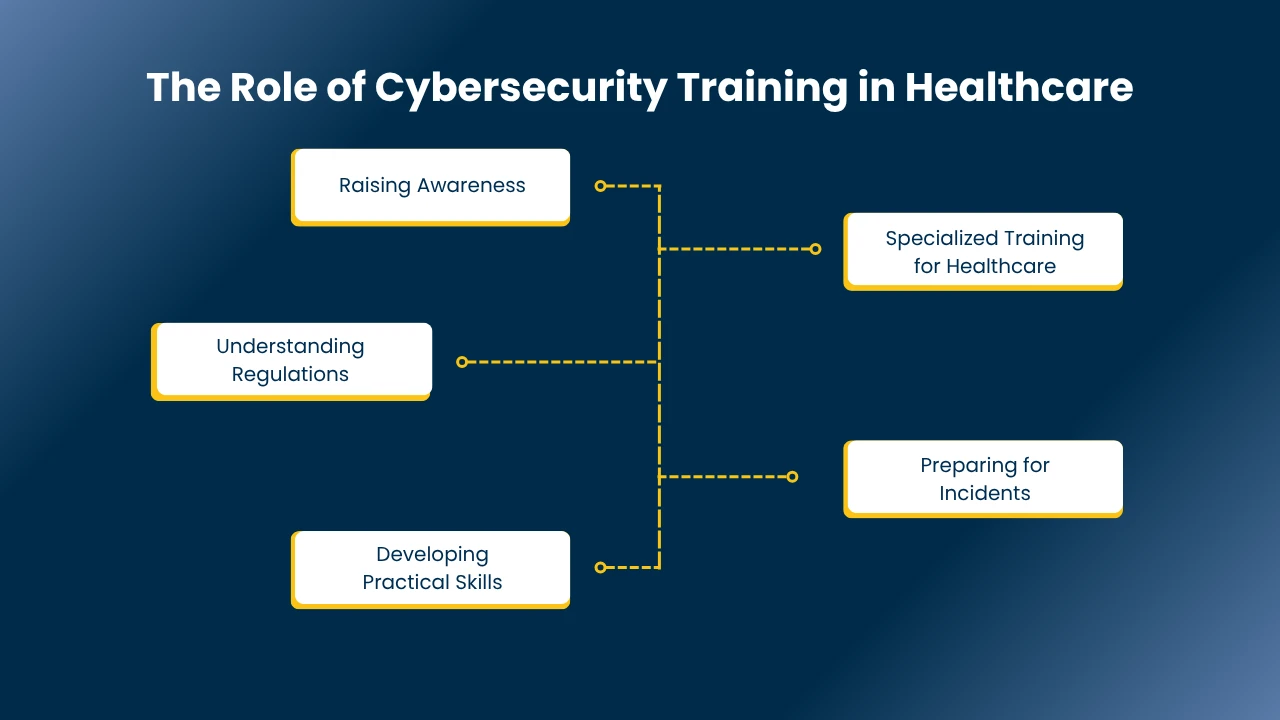
The Role of Cybersecurity Training in Healthcare
Given the complexity and frequency of these threats, healthcare professionals must be well-versed in cybersecurity principles. Training is a crucial component of building a secure healthcare environment. Courses like a Cyber security course training, CybersecTraining course for beginners, and Cybersecurity training for Healthcare can equip healthcare workers with the knowledge and skills needed to safeguard patient data effectively.
- Raising Awareness: One of the primary goals of cybersecurity training is to raise awareness among healthcare employees about potential cyber threats. Many successful cyberattacks exploit human error, such as clicking on malicious links or falling for phishing scams.
- Understanding Regulations: Healthcare is a heavily regulated industry with strict guidelines on data protection, such as the Health Insurance Portability and Accountability Act (HIPAA) in the United States. Cybersecurity training ensures that healthcare professionals are aware of these regulations and understand how to comply with them.
- Developing Practical Skills: For those new to the field, a CybersecTraining course for beginners offers foundational knowledge about cybersecurity principles, tools, and techniques. These courses often cover essential topics such as network security, encryption, and access control measures.
- Specialized Training for Healthcare: A Cybersecurity training for Healthcare program focuses specifically on the unique challenges and threats faced by the healthcare sector. This specialized training helps IT professionals in healthcare understand the specific vulnerabilities of electronic health record (EHR) systems, IoMT devices.
- Preparing for Incidents: Cybersecurity training programs also emphasize the importance of incident response planning. Healthcare organizations must have a robust plan to detect, respond to, and recover from cyber incidents.
Choosing the Best Cybersecurity Course Training for Healthcare
With the growing demand for cybersecurity skills in healthcare, numerous training programs are available. Choosing the Best cyber security course training can be challenging, especially for beginners.- Accreditation and Certification: Look for courses accredited by recognized bodies and those that offer certification upon completion.
- Relevance to Healthcare: Ensure that the course content is tailored to the healthcare industry. Generic cybersecurity training may not cover specific threats and regulations pertinent to healthcare. A specialized Cybersecurity training for Healthcare will provide more relevant and applicable knowledge.
- Hands-On Experience: Theoretical knowledge is essential, but practical, hands-on experience is invaluable. Look for courses that offer lab exercises, simulations, or real-world case studies to apply what you’ve learned.
- Flexibility: Healthcare professionals often have demanding schedules, so flexibility is crucial. Many Cyber security course training programs offer online, self-paced learning options that allow you to balance work and study effectively.
- Expert Instructors: Learning from experienced professionals in the field can provide deeper insights and practical tips. Look for courses taught by instructors with substantial experience in healthcare cybersecurity.